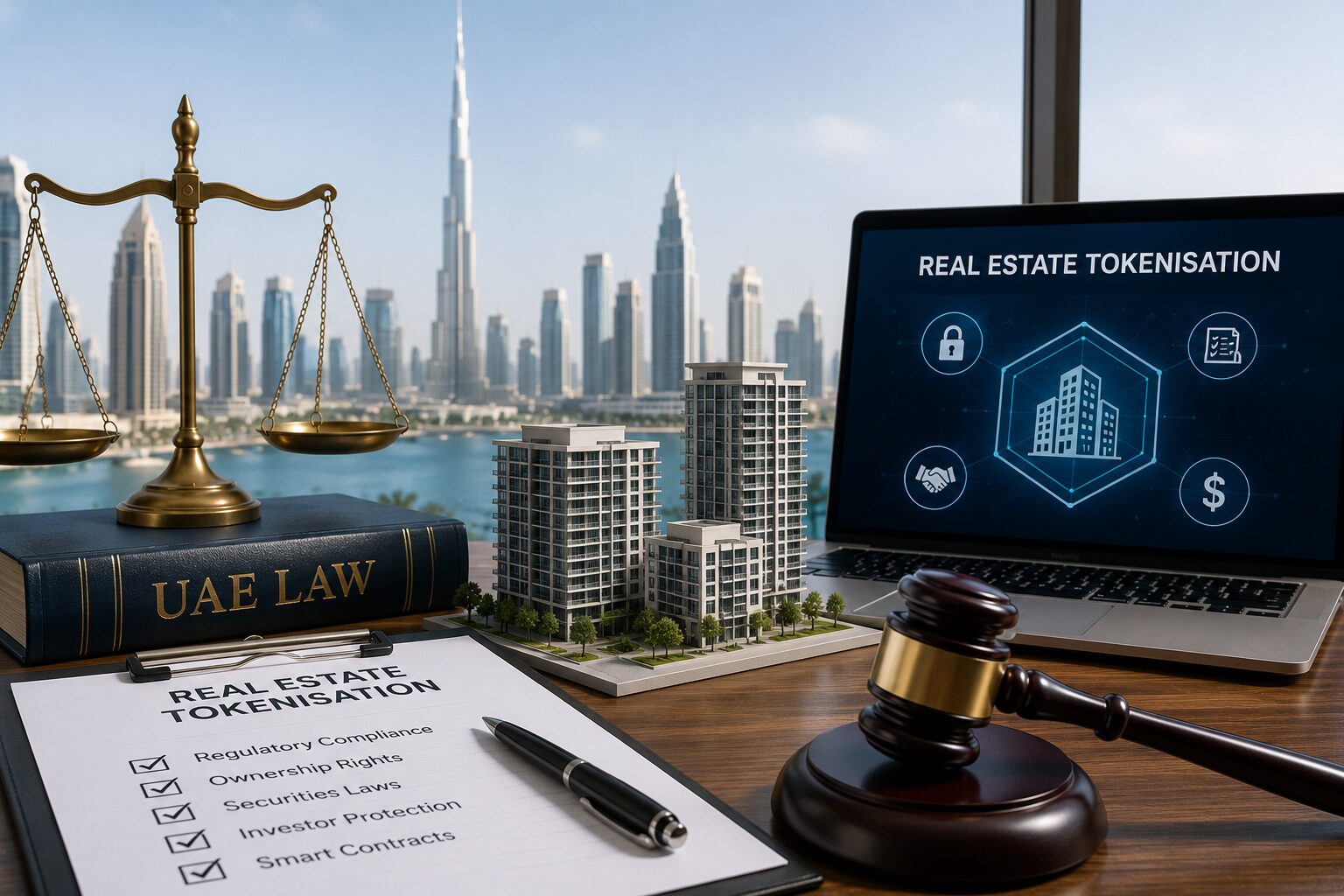
In terms of technological advancements, the real estate industry is advancing through blockchain. One of the major trends includes tokenisation of real estate, where the ownership of the property becomes digitised in the form of tokens that can be purchased, traded or sold. This development promises improved liquidity and attracts international investors.
It should be noted that tokenisation is not merely a technical issue but one that also requires consideration of many laws and regulations. It is important to know UAE law to launch or invest in a tokenised real estate project. Therefore, professional legal consultation provided by a Dubai lawyer should be sought.
At Charter Legal, we provide legal advice for businesses and investors when dealing with blockchain technology, digital assets and real estate in the UAE.
What Is Real Estate Tokenisation?
Real Estate Tokenisation refers to the process of creating digital tokens for real estate properties using blockchain technology. This means that ownership rights in respect of a particular property will be broken down and converted into digital tokens that might be owned by different investors.
The advantages of this include:
- Opportunities for fractional ownership
- Investor accessibilities
- Quick transaction processes
- Transparency
- Liquidity in real estate assets
As novel as it is, all tokenised projects will have to abide by laws relevant to real estate, securities, financial services, and digital assets under UAE law.
The Importance of Complying with Laws
A tokenised project involves multiple fields of law, including but not limited to real estate, company law, financial regulations, technology, and intellectual property. Non-compliance may result in problems and even lawsuits.
Professional legal services in the UAE will assist businesses in:
- Creating proper structures for tokenised projects
- Determining necessary licensing
- Creating legally binding agreements
- Protecting the interests of investors
- Minimising legal risks
Collaboration with a professional Dubai lawyer will help ensure that all legal obligations are fulfilled before starting a project.
Understanding UAE Regulatory Requirements
The UAE has emerged as one of the key destinations for blockchain innovations despite its robust regulatory approach. Based on the project’s structure, various regulatory bodies may regulate the tokenisation of real estate projects.
Key Legal Aspects are:
Ownership Legislation
Each tokenised asset will be required to conform to the existing legislation related to real estate ownership. Proper legal documentation is necessary, as well as the definition of investors’ rights.
Securities Legislation
Depending on the way in which some of the real estate tokens can be offered, they can fall under the category of securities and, therefore, some additional licenses and compliance will be needed.
Proper legal consultation can help establish the legal status of each tokenisation project before the launch.
Anti-Money Laundering (AML)
Any business working with digital assets needs to have proper AML and KYC procedures.
Importance of Smart Contracts
Smart contracts are used to automate transactions in the blockchain platform. Though they enhance efficiency, they must always be in line with legally binding terms.
The professionally drafted smart contracts will entail:
- Ownership terms
- Conditions of transfer
- Responsibilities of investors
- Methods of dispute resolution
- Compliance obligations
A competent lawyer based in Dubai can examine the smart contracts and check that they conform to UAE laws.
Investor protection and risk disclosure
Transparency is among the key legal requirements in tokenised real estate projects.
The project management will have to disclose the following information:
- Investment risks
- Method of valuing the property
- Expected returns
- Investor rights
- Exit strategies
- Management duties
Proper documentation helps reduce disputes while building investor confidence.
Data Privacy and Cybersecurity
Blockchain ventures tend to gather personal and financial data of their investors. In case of the collection, storage and processing of data, companies should be aware of any relevant privacy laws.
Also, companies need to ensure proper cybersecurity to protect digital wallets, personal data of investors and blockchain infrastructure from potential cyber risks.
Professional Legal Services UAE may provide help to companies in drafting compliant privacy policies.
Legal issues in Cross-Border Investments
One of the benefits of tokenisation is the possibility to attract investors from other countries. However, this brings more legal risks.
Companies need to assess:
- Foreign ownership laws
- Taxation
- International regulations
- Dispute settlement in case of cross-border investments
- Investor eligibility
Legal consultation will help to design the transaction according to both UAE and international law.
Intellectual Property and Technology Agreements
Blockchain networks may include proprietary software, smart contracts, and infrastructure. Intellectual property rights are another key aspect from a legal standpoint.
One should make sure that:
- There are valid software licensing agreements.
- Technology alliances are well documented.
- Intellectual property rights are well protected.
- Confidential information of the company is secured.
We can provide you with agreements to protect your technology interests and help with your business development.
Why Choose Charter Legal?
As technologies and tokenised assets continue evolving, there will be more questions regarding the legal aspects of doing business in this area. You need an experienced attorney to advise on blockchain and tokenised real estate in the UAE.
We offer you comprehensive legal services in the UAE related to blockchain and other novel technologies for blockchain startups, real estate developers, investors, and tech companies. We assist our clients in making strategic legal consultations regarding the regulatory requirements and commercial activities.
If you have an idea for a real estate development via tokens, we will gladly guide you through all legal issues.
Conclusion
Tokenization of real estate is certainly a big chance for both investors and developers, bringing with it improved accessibility, efficiency, and liquidity. Yet, the success of the venture will depend on making sure that all requirements of UAE law are met in the process and that the right structure is put in place.
Every single aspect from obtaining necessary permissions and developing smart contracts to protecting the investors and complying across borders will require legal considerations. With the help of Charter Legal, you can use innovative solutions with no legal risk.